Japanese Fountain Pen Inks: Iroshizuku, Shikiori and More
Affiliate Disclosure: This site contains affiliate links. If you make a purchase through these links, we may earn a commission at no extra cost to you.
For most people, the best Japanese fountain pen ink is Pilot Iroshizuku for color, Sailor Kiwaguro or Platinum Chou Kuro for a water-resistant black, Platinum Classic Ink if you want to watch the color darken as it dries, and Pilot's standard blue-black for value. The right choice depends on the paper you write on and how much maintenance you will actually do.
Japan's three big fountain pen makers each run an ink line with a distinct personality: Pilot chases color, Sailor bottles the seasons, and Platinum keeps the permanent inks. Start with the type of ink that fits how you write, then pick a color.
Pick the ink type before the color
Fountain pen ink comes in three chemistries, and the type decides more than the color does.
Dye ink is colorant dissolved in water. It soaks into the page, comes in the widest color range, shows the most shading and cleans out of pens easily. Its weakness is water: most dye ink lifts if the page gets wet. Iroshizuku and Shikiori are both water-based dye inks.
Pigment ink carries solid color particles that sit on the paper surface. It resists water and light, which makes it the choice for signatures, addresses and anything that must survive a spill. The trade-off is maintenance: pigment ink belongs in a pen you use regularly, not one that sits filled for months.
Iron gall ink is the oldest formula of the three. It goes down as a vivid dye color, then the iron content oxidizes and the line darkens toward black while becoming water and light resistant. Platinum's Classic Ink line is the modern Japanese example.
Pilot Iroshizuku: the color benchmark
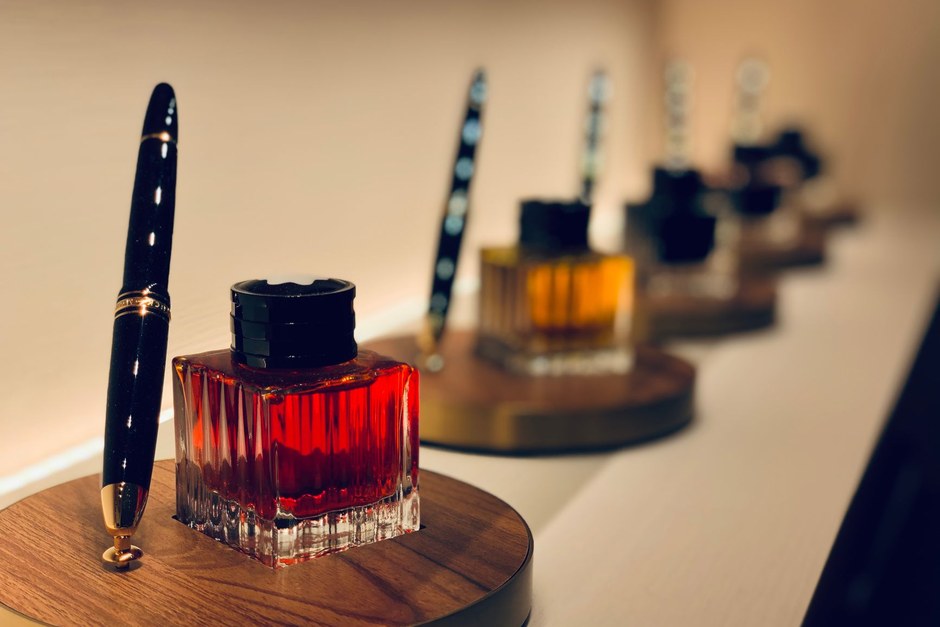
Pilot launched Iroshizuku in 2007 and it effectively created the premium bottled color ink market. The colors take their names from Japanese scenery. Even the bottle is part of the pitch: Pilot says it designed the perfume-style glass bottle from scratch with a glass workshop.
The full bottle is 50 ml with a Japanese list price of 2,200 yen, and the 15 ml Iroshizuku mini is 1,100 yen, which makes the minis the sensible way to test a color. The line keeps growing: in October 2024 Pilot added three colors, Touro (orange), Shungyou (a reddish black) and Rikka (blue).
If you buy one bottle to understand why people photograph ink, buy an Iroshizuku color you love looking at. These are dye inks, so they behave in any pen and clean out without drama. Just don't expect them to survive a coffee spill.
Browse Pilot Iroshizuku inks on Amazon →
Sailor Shikiori: a season in a 20 ml bottle
Sailor's Shikiori line sells color as weather. The official pitch is inks that evoke the four seasons of Japanese nature, and the color names read like a calendar: spring haze, summer rain, autumn moon, winter frost. Sailor lists the ink as water-based dye in a 20 ml bottle, a smaller size that encourages collecting rather than committing to one color for years.
The lineup rotates. Sailor's official color page currently lists 32 bottled colors across five series (Izayoi no Yume, Tsukuyono Minamo, Amaoto, Sansui and Kusa Asobi), with twelve of the newest colors sold only as bottled ink and cartridges, and several older Fairy Tale colors marked end of production. If you fall for a Shikiori color, buy it while it's current. Cartridge versions and matching twin markers exist for much of the range.
Shikiori is the pick for journaling and letters where the ink is half the point. Like Iroshizuku, it is a well-behaved dye ink; unlike Iroshizuku, the 20 ml size keeps the per-color commitment small.
Browse Sailor Shikiori inks on Amazon →
The blacks that survive water: Kiwaguro and Chou Kuro
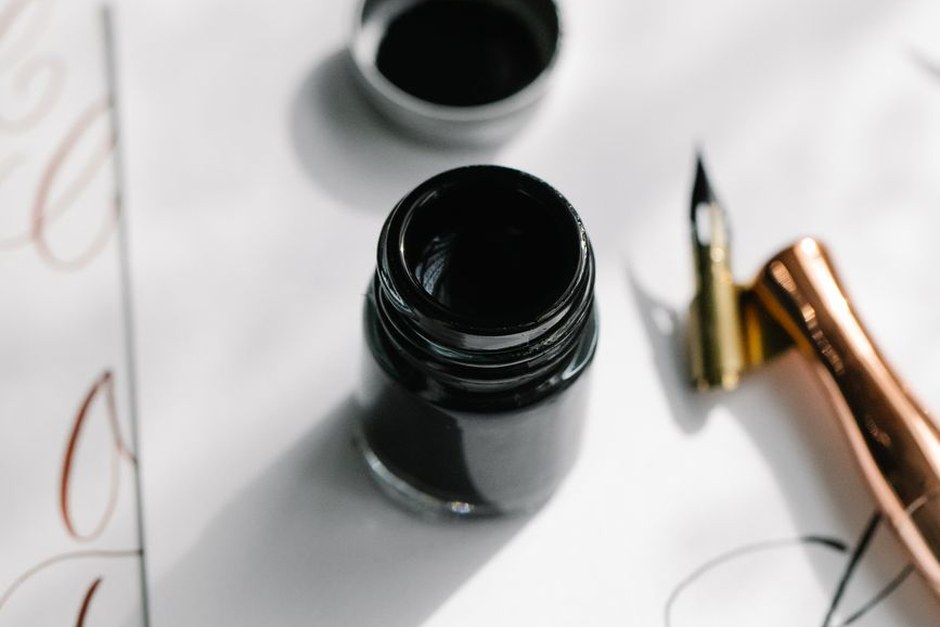
For a signature, an envelope address or anything that cannot smudge, you want a pigment black. Sailor's Kiwaguro is the one with official engineering claims behind it: Sailor describes it as a proprietary "super tiny particles" pigment ink designed to minimize clogging, written to feel like a dye ink, with minimal bleeding and resistance to show-through, suitable for everything from illustrations to official documents. It comes in a 50 ml bottle.
Platinum's answer is Chou Kuro, a carbon pigment black sold in a 60 ml bottle. Between the two, choose by pen and price: both are water-resistant once dry. The rule for either is simple. Keep the pen in rotation and flush it when you change inks. Pigment particles do not forgive a pen left in a drawer for six months.
Check Sailor Kiwaguro on Amazon → Check Platinum Chou Kuro on Amazon →
JetPens carries Chou Kuro too (a plain link; we like their ink selection).
Platinum Classic Ink: the ink that changes color
Platinum's Classic Ink is the odd one out, in a good way. It uses the traditional iron gall method that was originally developed for document preservation, where water and light resistance were requirements. Platinum describes the behavior plainly: the ink starts as a vivid dye color, then the iron content oxidizes and the writing darkens toward black as it fixes to the page. The color change is the feature, and the line leans into shading.
There are six colors in the range. If you want an everyday blue-black with more personality than a standard cartridge, this is the interesting choice, with the bonus that it survives water once dry. As with pigment ink, use the pen regularly and clean it on color changes.
Browse Platinum Classic Ink on Amazon →
The value pick: Pilot's standard inks
Not every refill deserves a perfume bottle. Pilot's general writing ink line covers the basics, including the blue-black that has been the Japanese office default for decades, in 30 ml (INK-30) and 350 ml (INK-350) bottles in Pilot's web catalog. It is the ink to keep by the door for forms, envelopes and the pen you lend people.
Find Pilot blue-black ink on Amazon →
Match the ink to your paper and pen
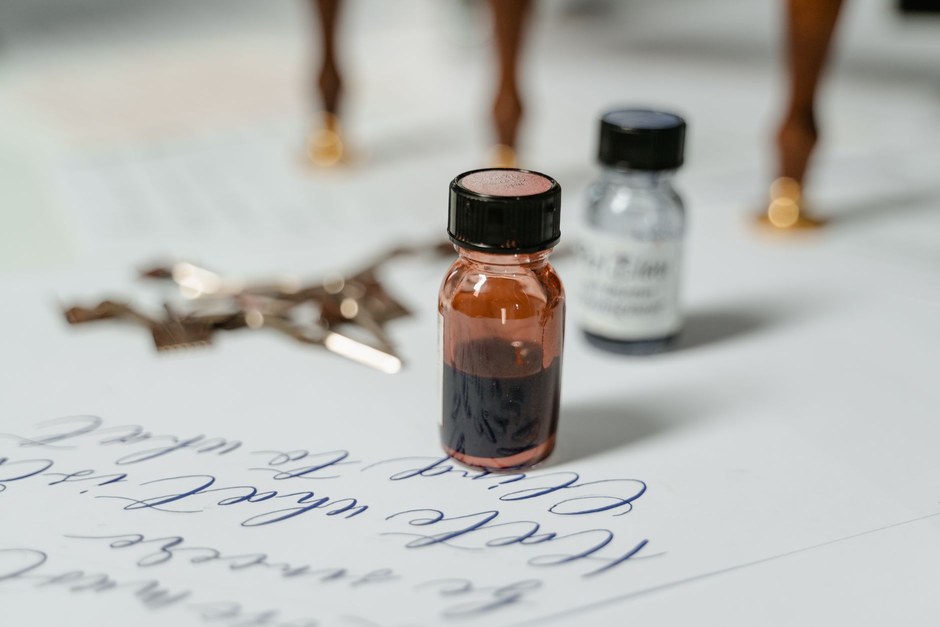
Dye ink on resistant paper is where the show happens. Shading and sheen need a coated surface that holds ink on top, and nothing does that like Tomoe River. Our Tomoe River paper guide explains the paper and the dry-time trade-offs that come with it.
Pigment ink flips the logic. Because the particles sit on the surface, Kiwaguro-style inks behave well on cheap copy paper where dye inks feather and bleed. If your daily notebook is ordinary office paper, a pigment black will look better on it than a fancy dye color.
On the pen side, every Pilot, Sailor and Platinum cartridge/converter pen can run all of these inks: the proprietary cartridges only matter until you fit the converter, and from then on any bottled ink is fair game. Our fountain pen guide covers the pens, and the Preppy review is the cheapest way to start playing with bottled ink.
Japanese Fountain Pen Ink FAQ
Are Japanese fountain pen inks safe to use in any fountain pen?
Dye inks like Pilot Iroshizuku and Sailor Shikiori work in any cartridge or converter fountain pen. Pigment inks like Sailor Kiwaguro and iron gall inks like Platinum Classic are also made for fountain pens, but they reward regular use and routine cleaning rather than being left in an unused pen for months.
What is the difference between dye and pigment fountain pen ink?
Dye ink is colorant dissolved in water: it soaks into paper, comes in the widest color range and shows the most shading, but most of it washes away if the page gets wet. Pigment ink carries solid color particles that sit on the paper surface, making it resistant to water and light, which is why pigment blacks are used for signatures and documents.
Is Pilot Iroshizuku ink worth the price?
For most ink fans, yes. Iroshizuku is the reference color line, with colors themed on Japanese scenery and a 50 ml bottle designed with a glass studio. If you want to try before committing, the 15 ml Iroshizuku mini bottles cost about half the list price of the full size.
Which Japanese fountain pen ink is waterproof?
Pigment blacks: Sailor Kiwaguro and Platinum Chou Kuro are both water-resistant once dry, and Sailor describes Kiwaguro as suitable for official documents. Platinum's Classic Ink line (iron gall) is also water and light resistant. Ordinary dye inks, including Iroshizuku and Shikiori, are not water-resistant.
Will iron gall ink damage my fountain pen?
Platinum developed its Classic Ink line specifically as fountain pen ink, using a traditional iron gall method. The historic warnings about iron gall come from much older, harsher formulas. Normal habits are enough: use the pen regularly and clean it when you change colors or store it.
Sources
Checked October 29, 2026. Primary sources: Pilot's Iroshizuku new colors press release and Iroshizuku mini press release, Sailor's Shikiori bottled ink page, official Shikiori color lineup and Kiwaguro product page, and Platinum's Classic Ink brand page. Pilot's standard ink bottle codes are from Pilot's web catalog.
Keep reading: Pair your ink with the right surface in our Tomoe River paper guide, find a pen in the fountain pen guide, or see where to buy Japanese stationery for trusted shops.