Best Japanese Mechanical Pencils — Kuru Toga, Orenz, Alpha Gel & More
Affiliate Disclosure: This site contains affiliate links. If you make a purchase through these links, we may earn a commission at no extra cost to you.
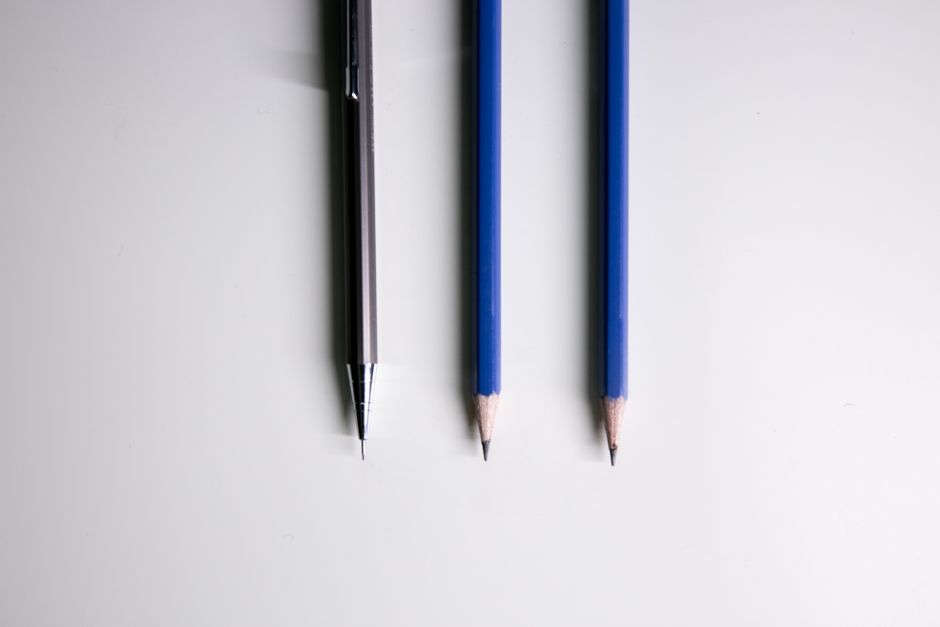
Uni Kuru Toga — The Mechanical Pencil That Changed Writing
The Uni Kuru Toga is the most celebrated mechanical pencil innovation of the past two decades. Its claim to fame is the "Kuru Toga engine": a mechanism inside the pencil that rotates the lead as you write, keeping it uniformly sharp at all times.
Here is how it works. Every time you lift the pencil from the page, a spring-loaded clutch rotates the lead by a fraction of a degree. After about 40 strokes, the lead has rotated a full 360 degrees. The result is a consistently sharp, uniform line width. No flat spots. No thick-and-thin inconsistency. The difference between a Kuru Toga line and a standard mechanical pencil line is immediately visible. The Kuru Toga line is even and dark from the first word to the last.
The Kuru Toga comes in several models. The Kuru Toga Standard (plastic body, ~$6) is the entry point. The Kuru Toga Roulette (~$12) has a knurled metal grip section and a heavier brass clutch mechanism. It is the most popular model. The Kuru Toga Advance (~$10) features a faster rotation engine that turns the lead twice per stroke. The Kuru Toga Alpha Gel (~$14) combines the rotating engine with a gel grip for maximum comfort. There is also the Kuru Toga Dive (~$25), the premium model with a retractable sleeve and automatic lead advance.
The Kuru Toga mechanism works with 0.5 mm lead (most common) and 0.7 mm lead. It is ideal for writing and general use, anywhere you want consistent, dark lines without rotating the pencil manually. It is less ideal for drafting (you typically rotate the pencil yourself) and drawing (you may want the control of a non-rotating tip).
Best for: everyday writing, note-taking, journaling, students, anyone who writes by hand a lot.
Uni Orenz — The Thin Lead Specialist
While Kuru Toga solves the uneven tip problem, the Uni Orenz solves the broken lead problem. The Orenz uses a unique guide pipe system: a thin metal sleeve surrounds the tip of the lead and extends as the lead wears down. This sleeve prevents the lead from snapping, even with 0.2 mm and 0.3 mm leads. Sizes that would break instantly in a standard pencil.
The Orenz comes in 0.2 mm, 0.3 mm, 0.5 mm, and 0.7 mm. The 0.2 mm and 0.3 mm versions are where the Orenz truly shines. No other mechanical pencil can reliably handle leads this thin. The writing is incredibly precise, and the line is fine enough for the smallest Hobonichi grid squares and technical drawings.
The Orenz comes in a standard plastic version (~$8-$10) and two premium versions: the Orenz Nero (~$20-$25) and the Orenz Metal (~$18). The Nero has a full metal body, an automatic lead advance (no clicking required), and a weighted barrel for balance. The automatic advance mechanism is especially convenient. Just push the tip against the paper, and the lead feeds automatically.
Important distinction: Uni Orenz (this section) and Pentel Orenz (later section) are completely different products from different companies. The names are confusingly similar, but the pencils are unrelated.
Best for: ultra-fine writing, technical drawing, detailed planner work, people who break lead constantly.
Pilot S Series (S20, S30) — The Wood-Bodied Beauty
The Pilot S Series (S20, S30, and the discontinued S10 and S15) are wood-bodied mechanical pencils that stand out for their warm, natural aesthetic. The S20 and S30 use a machined brass mechanism inside a body made from Japanese oak or walnut wood. The result is a pencil that looks more like a fine writing instrument than a drafting tool.
The Pilot S20 is the more classic model. It has a textured wooden barrel with a metal grip section and a brass clutch. The taper of the body is designed to fit the hand naturally, and the weight is balanced toward the tip for controlled writing. The S20 comes in 0.3 mm, 0.5 mm, and 0.7 mm. The 0.5 mm is the sweet spot for most users.
The Pilot S30 is the newer model, with a slightly different body shape and a more modern grip design. It uses the same brass mechanism but has a sleeker, more streamlined profile. The S30 is available in 0.5 mm only.
Both the S20 and S30 are refillable with standard Pilot lead. They use a twist-erase mechanism at the top that is satisfying and functional. The wood body develops a patina over years of use, making each pencil unique.
Best for: writing, journaling, desk use, aesthetic appreciation, gift giving.
Pentel Orenz — The Drafting Standard
Let me clear up the confusion. Pentel Orenz is not the same as Uni Orenz. Pentel and Uni are separate companies (Pentel is Pentel, Uni is Mitsubishi Pencil Company). The naming similarity is an accident of the Japanese market. They are entirely different pencils.
The Pentel Orenz (also called the Pentel Orenzner or PG series) is a classic drafting pencil. It has a full metal body (aluminum or brass depending on the model), a fixed 4 mm tip sleeve, and a 4-position hardness indicator on the cap. It comes in 0.3 mm, 0.5 mm, 0.7 mm, and 0.9 mm.
What makes the Pentel Orenz a drafting standard is the precision and consistency. The metal body gives it weight and balance. The fixed sleeve eliminates tip wobble. The lead advance mechanism is smooth and reliable. The hardness indicator lets you track which lead grade (HB, B, 2B, etc.) you are using.
The most popular model is the Pentel Orenz PG5 (0.5 mm), the workhorse of architects, engineers, and artists worldwide. The Pentel Orenz P203 (0.3 mm) is a favorite for ultra-fine technical drawing. The Pentel Orenz PG7 (0.7 mm) is less common but valued for its thicker, more durable lead.
Best for: drafting, technical drawing, architects, engineers, anyone who wants a precise, reliable tool.
Kokuyo FitCut — The Sharp Mechanic Pencil
The Kokuyo FitCut is an unusual and clever pencil that Kokuyo calls a "sharp mechanic pencil." It looks like a mechanical pencil but functions more like a traditional sharpened pencil, with a key difference: the tip is mechanical, so you never need a sharpener.
The FitCut uses a sliding sleeve mechanism. When you push the slider forward, the sleeve retracts to expose more lead (simulating a freshly sharpened tip). As you write, the sleeve wears down just like a traditional pencil tip would. The line gets thicker, and you push the slider forward again to "sharpen" it. The result is the authentic feel of a wooden pencil with the convenience of a mechanical pencil.
The FitCut comes in 0.5 mm and 0.7 mm. The body is plastic but well-made, with a triangular grip section that promotes proper writing posture. It is a niche product. The sliding sleeve mechanism has a learning curve. But once you get used to it, the FitCut offers a writing experience that no other pencil can replicate.
Best for: people who miss the feel of a wooden pencil, writers who want a unique experience, Kokuyo enthusiasts.
Lead Sizes Comparison
| Lead Size | Line Width | Best For | Fragility |
|---|---|---|---|
| 0.2 mm | Ultra-fine | Technical drawing, micro-handwriting, Uni Orenz only | Very fragile (Orenz guide pipe required) |
| 0.3 mm | Very fine | Detailed drafting, planner grids, precise sketching | Fragile (use Orenz for safety) |
| 0.5 mm | Fine (standard) | Everyday writing, general use, most versatile | Moderate — standard for most pencils |
| 0.7 mm | Medium | Writing, less breakage, people with heavy hands | Strong — rarely breaks under normal use |
| 0.9 mm | Thick | Shading, sketching, rough work | Very strong — rarely breaks |
0.5 mm is the standard for a reason: it balances line fineness with strength. If you have a heavy hand, go up to 0.7 mm. If you need extreme precision (or want to write in Hobonichi grid squares), try 0.3 mm with a Uni Orenz.
Drafting vs General Use — Which Pencil for What?
The mechanical pencil world splits into two broad categories: drafting pencils (designed for technical precision) and general-use pencils (designed for comfortable writing).
Drafting Pencils
Typified by the Pentel Orenz (PG series) and Pilot S20. They have fixed metal sleeves (4 mm), full metal bodies for weight, and a hardness indicator. The fixed sleeve lets you use a ruler or template without the pencil body getting in the way. These are the pencils of architects, engineers, and artists who need precision above all. They are also excellent for people who want a heavy, balanced writing tool. Many writers prefer drafting pencils for the feel alone.
General-Use Pencils
Typified by the Uni Kuru Toga, Uni Orenz, and Kokuyo FitCut. They have retractable or sliding sleeves that protect the tip when pocketed. They prioritize comfort (gel grips, lighter bodies) and innovation (rotating engines, automatic advance, sliding sleeves). These are the pencils for students, writers, journalers, and anyone who uses a pencil as an everyday writing tool.
The Blurred Line
The Uni Kuru Toga Roulette and the Pentel Orenz (PG series) both sit at the intersection. The Roulette has a knurled metal grip (drafting style) with the Kuru Toga rotating engine (general purpose). The Pentel Orenz is a drafting pencil that works beautifully for writing. Do not overthink the categories. Buy the pencil that feels best in your hand.
Top Japanese Mechanical Pencil Picks
Uni Kuru Toga Roulette — 0.5 mm, Gunmetal
The best all-around mechanical pencil. The Kuru Toga engine keeps your lead sharp at all times. A genuine quality-of-life improvement for anyone who writes by hand. The Roulette model upgrades the plastic body with a knurled metal grip section and a brass clutch for heft and durability. The 0.5 mm is the perfect size for everyday writing.
Uni Kuru Toga Advance — 0.5 mm, Clear Body
The faster rotation engine is not just marketing. The Advance genuinely keeps the lead sharper with fewer strokes. It is especially noticeable when writing in languages that require many individual strokes (like Japanese kanji or printed English). The clear body looks great and shows the mechanism in action.
Uni Orenz Nero — 0.3 mm, Automatic Lead Advance
An incredible ultra-fine pencil. The 0.3 mm lead lets you write in spaces that other pencils cannot reach. The automatic advance mechanism means you never click, just write. The full metal body gives it a premium feel. The guide pipe protects the fragile 0.3 mm lead from snapping. A true engineering marvel.
Pilot S20 — 0.5 mm, Japanese Oak
The most beautiful mechanical pencil on this list. The Japanese oak body warms with use and develops a unique patina over years. The brass mechanism is smooth and precise. The weight is perfectly balanced for writing. It is a pencil that makes you want to write, and that may be the most important feature of all.
Pentel Orenz PG5 — 0.5 mm (Drafting Pencil)
The drafting standard. Architects, engineers, and artists have trusted the Pentel Orenz PG5 for decades. The full metal body, fixed 4 mm sleeve, and hardness indicator make it a serious tool for serious work. It is also an excellent writing pencil. The weight and balance are unmatched at this price point.