The History of Japanese Stationery: From Fountain Pens to Global Obsession
Affiliate Disclosure: This site contains affiliate links. If you make a purchase through these links, we may earn a commission at no extra cost to you.
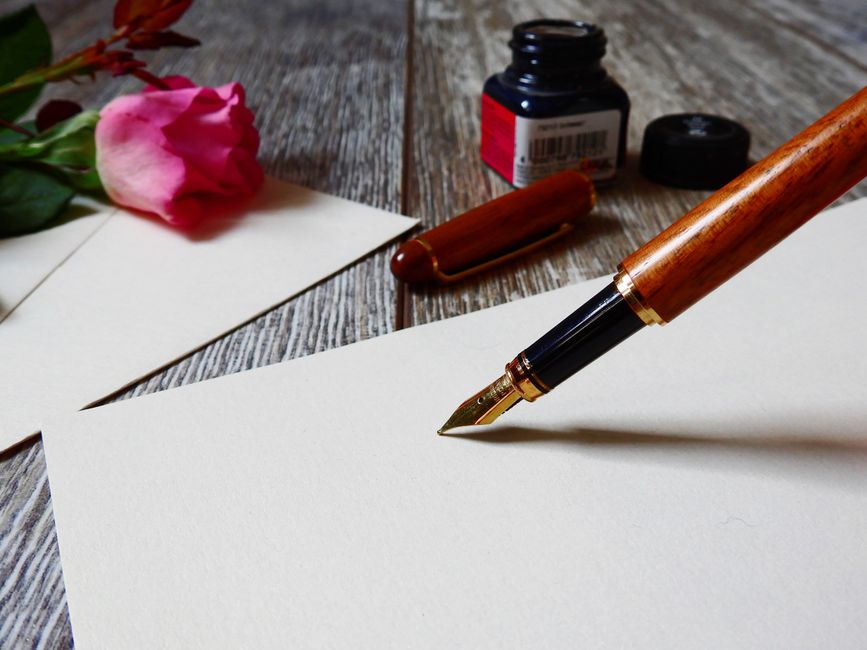
- Japan's stationery industry began with three fountain pen makers — Sailor (1911), Pilot (1918), and Platinum (1919) — who built domestic manufacturing during a national push for modernization.
- Sakura invented the gel pen in 1984 (Gelly Roll), sparking a global revolution where Japanese brands like Pilot G2, Uni Signo, Pentel EnerGel, and Zebra Sarasa came to dominate.
- Iconic products — Kokuyo Campus notebooks, Tombow MONO erasers, Midori Traveler's Notebook, Hobonichi Techo — became cultural staples through relentless quality improvement and thoughtful design.
- TikTok and social media turned Japanese stationery into a global phenomenon (#stationery passed 12 billion views), making once-obscure products like Zebra Mildliner viral hits.
The Early Days: Fountain Pen Pioneers (1911–1945)
The story of modern Japanese stationery starts with three companies that built Japan’s fountain pen industry. All three were founded within eight years of each other, back when Japan was rapidly industrializing and building its own manufacturing capabilities.
Their timing wasn’t a coincidence. It lined up with Japan’s push toward modernization, where making things domestically became a national priority. I think that’s part of what makes this history so interesting — you can see the same drive for self-sufficiency in the early days of each of these companies.
Sailor (1911)
Sailor is Japan’s oldest fountain pen maker, founded in 1911 in Hiroshima by Kyugoro Sakata. The company name comes from Sakata’s background as a sailor before he got into manufacturing. From the start, Sailor wanted to produce writing instruments that could match — or beat — imported European pens, which ruled the Japanese market back then.
Sailor succeeded early on because they made their own nibs in-house. Lots of early Japanese pen makers imported German or American nibs, but Sailor built their own nib manufacturing, which gave them control over quality and design.
They still do this today. Those 21-karat gold nibs, hand-finished by craftsmen in Hiroshima, are some of the finest production nibs money can buy.
Pilot (1918)
Pilot was founded in 1918 by Ryosuke Namiki, a naval engineer who got interested in fountain pens while studying at Tokyo Imperial University. He started by making high-end fountain pens under the Namiki brand, and those pens quickly got a reputation for being exceptionally good.
The big breakthrough came with the “Namiki maki-e” fountain pen, decorated using traditional Japanese lacquer techniques with gold dust inlay. Those pens were shown at the 1927 Pacific Trade Exposition in San Diego and won international praise.
The company changed its name to Pilot in 1938, around the same time it started moving beyond luxury pens into the wider writing instrument market. Pilot became the official fountain pen supplier to the Japanese Imperial Navy during World War II. That contract shaped the company’s manufacturing capabilities for decades afterward.
Platinum (1919)
Platinum was founded in 1919 by Shunichi Nakata. The idea was to make fountain pens that ordinary Japanese people could afford. Back then, fountain pens were luxury goods, but Platinum wanted to build reliable, affordable writing instruments without cutting corners on quality.
That mission is still going strong. The Platinum Preppy, at about $5, might be the best-value fountain pen ever made. I honestly don’t think you can beat it at that price.
Platinum’s early innovations include a slip-cap mechanism that stops ink from drying out, a feature they’ve kept refining and still use today. They were also the first to use iridium-tipped nibs in Japanese fountain pens, which made the nibs much more durable and smoother to write with.
The pre-war era also saw other big names get started. Tombow was established in 1913, originally making pencils. Zebra began as a pen parts manufacturer in 1897 before making complete pens.
Kokuyo was founded in 1905 as a cover for school textbooks and eventually became Japan’s largest stationery manufacturer. All of them helped shape the industry into what it is today.
Post-War Development: Rebuilding an Industry (1945–1970)
The post-war years were a real turning point for Japanese stationery. Japan’s industrial base had been wrecked, but the American occupation brought exposure to Western manufacturing methods. Japanese companies absorbed what they learned and applied it intensely. I think that combination of outside influence and internal drive is what sparked so much innovation.
Pentel and the Mechanical Pencil
Pentel was founded in 1946 and went straight to work on what became a huge breakthrough: the mechanical pencil. In 1960, Pentel launched the world’s first retractable mechanical pencil. The “Pentel” name became so tied to mechanical pencils that people used it like “Kleenex” or “Xerox” to mean the whole category.
Meanwhile, the older manufacturers kept expanding. Pilot introduced its first ballpoint pen in 1953, a move that eventually became one of its biggest revenue streams. Tombow moved beyond pencils into erasers, launching the MONO eraser in 1969. Uni (Mitsubishi Pencil) had been making pencils since 1887 but started developing the ballpoint and gel pen tech that would make it a global name.
Export Boom and Global Recognition
The 1960s also saw Japanese companies start exporting in a big way. American and European buyers discovered that Japanese pens and pencils matched Western quality at much lower prices. This is when Japanese stationery started to build the worldwide reputation it has today.
I think two cultural forces pushed quality higher. First, Japan’s post-war education system stressed penmanship and taking care of your writing tools, which created a domestic market that demanded refinement. Second, the philosophy of monozukuri (craftsmanship and continuous improvement) got baked into Japanese manufacturing culture.
Companies competed hard on quality, and that competition pulled the whole industry up.
The Gel Pen Revolution (1980s–1990s)
The 1980s brought what might be the biggest thing to happen to writing instruments since the ballpoint: the gel pen. And a Japanese company invented it.
The Birth of Gel Ink
In 1984, Sakura Color Products launched the Gelly Roll. It used a water-based gel ink instead of the oil-based ink in ballpoints or the liquid ink in fountain pens. The new ink chemistry gave you the best of both worlds: the smooth, vibrant writing experience of a fountain pen with the convenience and reliability of a ballpoint.
The Gelly Roll created a whole new product category and it’s still one of the most popular pens ever made.
Japanese Competitors Respond
- Pilot G2 (1994): Became the best-selling gel pen in the world.
- Uni Signo: Introduced pigment-based gel ink that was waterproof and fade-resistant — a real technological step forward.
- Pentel EnerGel: Dried faster than any other gel ink on the market.
- Zebra Sarasa: Focused on smoothness and dependability.
Impact on the Global Market
The gel pen changed the writing industry for good. Gel pens took up a bigger and bigger share of the global pen market through the 1990s and 2000s, and Japanese companies led the way. Western brands like Bic and Paper Mate had a hard time competing with the writing quality and color range Japanese gel pens offered.
By the 2000s, if you wanted a really good gel pen, you bought Japanese. I still do.
The gel pen era also set the pattern for how Japanese stationery works: fierce competition and steady improvements. Each new generation brought finer tip sizes (down to 0.28mm), new ink formulas, better barrel designs, and more colors. This cycle of continuous improvement meant that every few years there was a genuinely better product on the shelf.
Sakura kept expanding the Gelly Roll line into all kinds of variants: metallic, stardust, moonlight, glow-in-the-dark, even scented ones. The brand became a global hit, especially with artists and crafters who loved the range of effects the pens could create.
Kokuyo Campus Notebook Legacy
While the pen companies fought the gel wars, Kokuyo was quietly building what became a notebook empire. The Kokuyo Campus notebook, first introduced in the 1970s, became the standard school notebook in Japan. Its dominance was so complete that “Campus” became almost generic — people used it like “Xerox” to mean any school notebook.
The original Campus notebook had specific features that made it ideal for students. The paper was smooth but not coated, so pens wrote without skipping and highlighters didn’t bleed through. The binding was thread-stitched instead of stapled, which let pages lie flat.
The corners were rounded so they wouldn’t dog-ear. The cover was sturdy enough to survive a whole semester in a backpack.
What made the Campus notebook a staple, though, was the quality. Japanese students are hard on their notebooks. They fill them with dense kanji characters, highlight key passages, and carry them everywhere. The Campus notebook held up through all of it, and that reputation for reliability got passed from student to student, generation to generation.
Kokuyo kept improving the Campus line over time. They added different ruling types (standard, graph, dot grid, blank), different sizes (B5 for students, A5 for professionals), and different paper weights. They developed the “Campus Easy Open” with perforated pages that tear out cleanly. They launched “Campus Study Plan” notebooks with built-in study scheduling tools.
Today, Kokuyo is still Japan’s largest stationery manufacturer, and the Campus notebook is still its most famous product. Generations of Japanese students have filled these notebooks with schoolwork, and plenty of adults keep using them for professional and personal writing.
The Campus notebook has become a shared experience that connects millions of people.
Tombow MONO Eraser: An Iconic Design
Engineering the Perfect Eraser
It’s rare for an eraser to become an icon, but the Tombow MONO has done exactly that. Since 1969, the MONO’s blue, white, and black striped packaging has become one of the most recognizable designs in stationery. The stripe pattern is so iconic that Tombow has trademarked it and licensed it for everything from clothing to phone cases.
But the MONO eraser isn’t just about the packaging. The eraser itself is carefully engineered. Tombow developed a vinyl compound that erases cleanly without smudging or damaging the paper. It produces neat, coiled shavings instead of crumbly debris.
It removes pencil marks completely without leaving gray residue behind. In my experience, nothing else quite matches it.
The MONO Family
- MONO (standard): All-purpose eraser, the classic design.
- MONO Zero: Precision eraser with a 2.3mm tip for detailed work.
- MONO One: Mechanical pencil-shaped eraser that advances with a click.
- MONO Smart: Rectangular stick with a metal holder.
Cultural Impact
The MONO eraser has seeped into culture beyond its function. The stripe pattern has shown up in art exhibitions, fashion collaborations, and design retrospectives. The eraser has been featured in museum collections as a piece of outstanding industrial design.
Limited-edition packaging variations have become collectible items in their own right.
Beyond Erasers: The Dual Brush Pen
Tombow’s other big product, the Dual Brush Pen, followed a similar path. Introduced in the 1990s, it combined a flexible brush tip for calligraphy with a fine bullet tip for detail work. The water-based ink blends beautifully with watercolor techniques.
The Dual Brush Pen became an essential tool for lettering artists, illustrators, and bullet journalists around the world. Today it’s available in over 100 colors and is one of the best-selling art supplies globally.
Midori Traveler's Notebook & MD Paper
From Printing Company to Stationery Icon
Midori started as a printing company in 1950, producing high-quality printed goods in Tokyo. They operated quietly for decades, building a reputation for excellent printing and design but staying relatively unknown outside Japan. Then came 2006.
The Traveler's Notebook Concept
Midori launched the Traveler’s Notebook, and the stationery world noticed. The concept was simple: a high-quality leather cover with elastic bands that held multiple insert notebooks. The inserts came in different paper types (blank, grid, lined) and sizes (regular, passport).
You could customize your notebook by mixing inserts and adding accessories like pen holders, zipper pouches, and card pockets.
The Traveler’s Notebook clicked with people who wanted one beautiful notebook that could do multiple things. A traveler could carry a journal, a sketchbook, and a trip planning insert all in one cover. A professional could combine a work notebook, a daily diary, and a meeting log.
The modular system meant the notebook could change as your needs changed. I think that’s why it took off the way it did — it adapts to you, not the other way around.
The leather covers developed a nice patina over time, and users started sharing photos of their worn-in notebooks online. Every crease, scratch, and stain told a story. The Traveler’s Notebook became more than a product. It became a companion, a canvas, and a community.
MD Paper: A Writer's Best Friend
Midori’s other big contribution is MD Paper. They spent years researching how paper interacts with different ink types. The result is an uncoated, high-quality paper that gives a distinctive writing feel. It has a subtle tooth that provides feedback for fountain pens without being rough.
It handles wet ink without bleeding. It develops a nice patina over time as it gets handled and written on.
MD Paper is used in Midori’s MD Notebook series, which has become a favorite among fountain pen enthusiasts and minimalists. The notebooks have cloth-bound covers with soft-touch finishes, thread-stitched binding that lies completely flat, and almost no branding — just a subtle foil stamp on the cover. They embody the Japanese design idea of ma (purposeful emptiness) in physical form.
The Modern Era: Hobonichi, Planner Culture & TikTok
The Hobonichi Techo
The modern era of Japanese stationery starts in 2005 with the Hobonichi Techo. It was created by Hobonichi Co., Ltd., led by writer and entrepreneur Shigesato Itoi. The Techo was originally just a simple daily planner for Japanese users. Nobody expected it to become what it did.
The Hobonichi Techo’s big idea was using Tomoe River paper, which is famously thin, strong, and fountain-pen-friendly. The paper let Hobonichi pack a full year of daily pages into a notebook much thinner than any comparable planner. And because the paper handled fountain pens so well, it drew in the growing community of fountain pen fans who wanted a planner that would work with their wet-writing pens without bleeding or feathering.
The Planner Boom
Hobonichi’s success sparked a new industry of Japanese planners. Kokuyo responded with the Jibun Techo, a more productivity-focused planner with monthly, weekly, and daily layouts plus goal-tracking and diary sections. The Jibun Techo appealed to people who wanted to track not just appointments but habits, moods, and productivity.
The planner boom created a new kind of stationery user. These weren’t just people organizing their schedules. They were creative people decorating their planners with washi tape, stickers, stamps, and hand lettering.
They shared their spreads on Instagram and YouTube, building a global community. They organized meetups around the world. They created their own vocabulary — spreads, dashboards, flips-through, sticker bombs — that served as a shared language.
TikTok Takes Over
Then came TikTok. The platform’s short videos and algorithm-driven discovery were perfect for stationery content. A 15-second video of a Tombow MONO eraser gliding across paper could get millions of views. A satisfying video of gel pens organized by color could launch a thousand new collections. The hashtag #stationery passed 12 billion views and kept climbing.
TikTok made Japanese stationery mainstream. Products that had been relatively obscure outside Japan — the Zebra Mildliner, the Uni-ball One, the Sarasa Grand — became viral hits. Small Japanese brands that had never exported suddenly got flooded with international orders. The global interest that had been building for decades finally hit critical mass.
Bloomberg took notice. In 2023, they ran a feature on the Hobonichi Techo, looking at how a $30 planner from Japan had become a global hit with a devoted following. The article pointed out what stationery fans already knew: Japanese stationery had become a cultural thing, a collectible hobby, and a creative outlet all at once.
Future Trends: Where Japanese Stationery Is Going
So what’s next? I’m seeing a few directions that look interesting.
Sustainability and Eco-Design
Japanese consumers care more about environmental impact these days, and stationery companies are responding. Kokuyo has the “THINK OF STATIONERY” line using recycled materials and sustainable manufacturing. Midori offers refill systems that cut down on waste. Pilot has developed fountain pens from recycled materials. I expect we’ll see more biodegradable packaging, plant-based inks, and repair-and-reuse programs from Japanese brands.
Digital-Physical Integration
The old digital vs. paper argument is being resolved as a partnership, not a battle. Kokuyo’s “Study Planner” app works with physical planners. Lots of brands are making systems that combine paper planning with digital scanning and archiving. The “smart notebook” category that lets you scan pages with a smartphone app is growing. The future isn’t paper or digital. It’s paper and digital.
Personalization and Customization
Midori’s Traveler’s Notebook made modular customization popular, and other brands are following. We’ll see more mix-and-match systems where you build your perfect notebook or planner from components. Limited-edition brand-artist collaborations will keep fueling the collector side of things. Brands like Sailor and Pilot already offer custom nib grinding and pen customization.
Global Expansion
Japanese stationery brands are putting more energy into international markets. Many are opening direct-to-consumer online stores with global shipping. Language barriers that once made discovery harder are being addressed with better English-language content and packaging. The Japanese stationery market, which used to focus mostly on domestic customers, is becoming truly global.
Community-Driven Product Development
The trend I find most interesting is how much influence the enthusiast community has on product development now. Hobonichi regularly surveys its users for feedback. JetPens, the leading US retailer of Japanese stationery, gives detailed feedback to Japanese manufacturers about what Western consumers want. Some brands now release products directly inspired by customer requests. The relationship between maker and user is more collaborative than ever before.
Looking back at the journey from 1911 to now, the story of Japanese stationery is one of steady improvement and real respect for the people who use these tools. It started with three fountain pen makers in the early 20th century and grew into a global cultural movement.
And if the past is any guide, the most interesting chapters are still ahead.